Buyer's guide

Neck Fan vs. Neck Air Conditioner: Which Is Right for You?

Not all personal coolers are the same. Learn the difference between a basic neck fan and a true neck air conditioner — and why semiconductor cooling is the upgrade that matters.

When summer hits, a portable neck cooler can feel like a lifesaver. But shopping for one gets confusing fast. You will see two main categories: neck fans that blow air at you, and neck air conditioners that actively chill your skin. Both are worn around the neck, yet they work very differently.

In this guide, we compare how each technology performs in real-world heat, then explain why the Breeze S300 combines the best of both approaches.
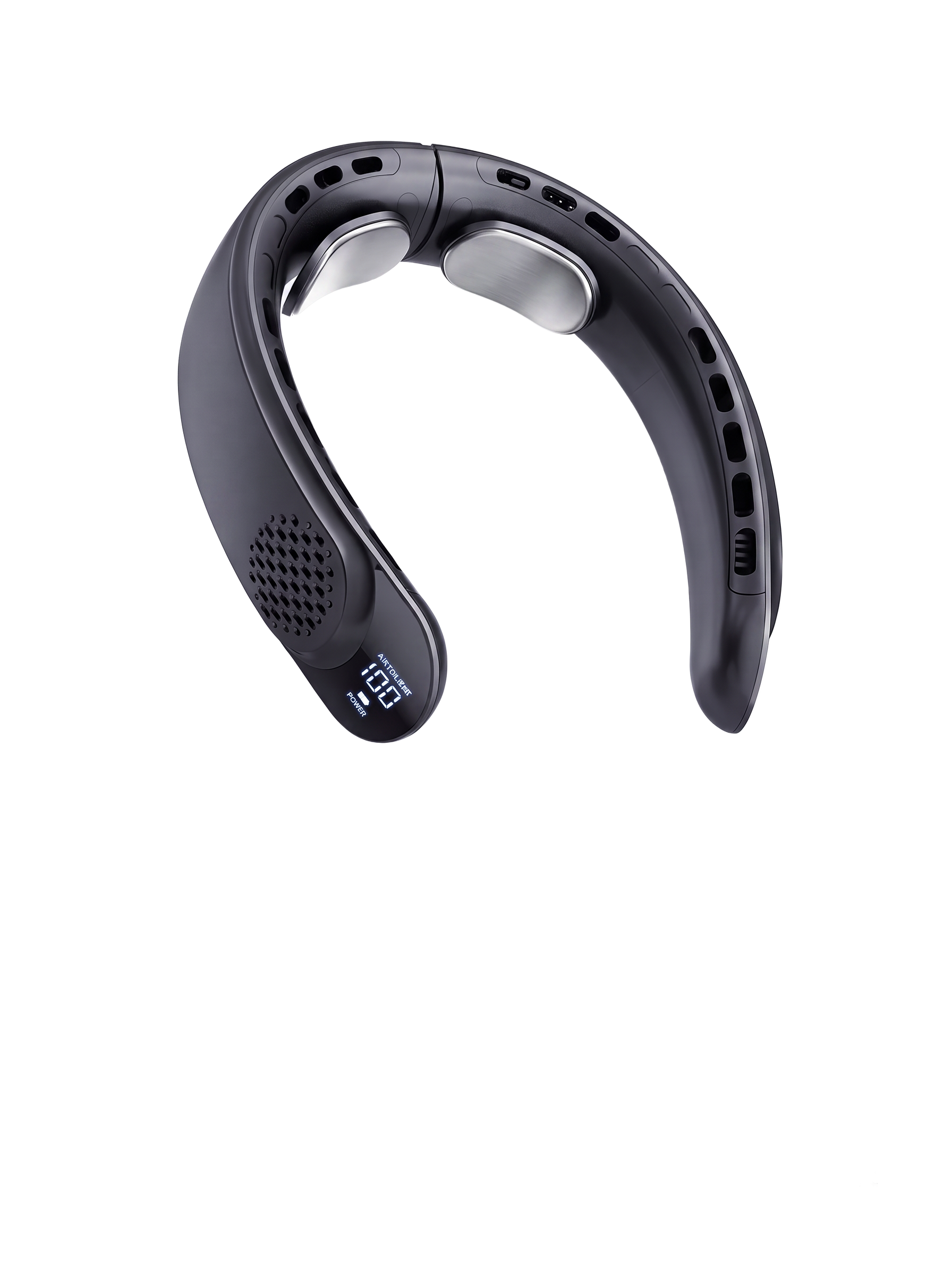
What Is a Neck Fan?

A traditional neck fan is a wearable device with small blades that blow air up toward your face and neck. It runs on a rechargeable battery and is popular because it is lightweight, affordable, and easy to use.

The cooling effect comes from evaporative cooling: moving air helps sweat evaporate faster, which makes you feel cooler. That works well in dry heat, but it is less effective in humid weather when sweat does not evaporate quickly.

  • Lightweight and budget-friendly
  • Long battery life
  • Weak in high humidity
  • Can be noisy and tangle hair

Best for

  • Dry climates and gentle cooling
  • Short walks or errands
  • Users who want the lowest price

What Is a Neck Air Conditioner?

Best for

  • Extreme heat and humidity
  • Outdoor workers and athletes
  • Anyone who wants a cold, not just breezy, sensation

A neck air conditioner uses a thermoelectric cooling plate — often called a Peltier module or semiconductor cooler — to actively pull heat away from your skin. Instead of just moving air, it creates a cold surface that presses against your neck.

This is the same technology found in portable mini fridges and high-end car coolers. Because it chills through conduction, it works even when the air is hot and humid.

  • Real cooling, even in humidity
  • Bladeless and quiet
  • Shorter battery life
  • Heavier and more expensive

Neck Fan vs. Neck Air Conditioner Comparison

FeatureBasic Neck FanNeck Air ConditionerBreeze S300
Cooling methodMoving air across skin (evaporative cooling)Thermoelectric plate actively chills skinSemiconductor cooling plate + airflow
Temperature dropFeels cooler only when air is below body tempCan feel cold even in hot, humid airRapidly drops surface temperature up to 15°F
Humidity performanceLess effective in humid weatherWorks regardless of humidityEffective in dry and humid climates
Battery life6–12 hours2–5 hours (cooling plates draw more power)Up to 12 hours with USB-C recharge
WeightLight (200–300 g)Heavier due to cooling plate and heat sink260 g ergonomic neck-hugging design
Noise levelOften 40–55 dBUsually quiet (no blades)Under 30 dB whisper-quiet
Best forGentle breeze on a budgetMaximum cold in extreme heatAll-day comfort, commuting, workouts, travel

Which One Should You Choose?

Choose a basic neck fan if...

  • You only need a light breeze indoors
  • You are on a tight budget
  • You do not mind a little fan noise

Choose a neck air conditioner if...

  • You face extreme heat or humidity
  • You want an actively cold sensation
  • You are willing to trade battery life for power
Semiconductor cooling

Why the Breeze S300 Is the Best of Both Worlds

The Breeze S300 is not a basic neck fan. It uses a semiconductor cooling plate — the same thermoelectric technology found in premium neck air conditioners — to actively drop surface temperature by up to 15°F.

At the same time, it keeps the lightweight, bladeless, whisper-quiet design of a high-end neck fan. That means you get real cold without the bulk, noise, or short battery life that usually comes with neck air conditioners.

  • 3-stage semiconductor cooling
  • 12-hour battery with USB-C fast charging
  • Effective in humid heat
Shop the Breeze S300
Breeze S300 neck cooling fan with semiconductor cooling plate

Frequently Asked Questions

Is a neck air conditioner better than a neck fan?

For extreme heat and humidity, yes. A neck air conditioner actively chills your skin instead of just moving air. However, basic neck fans are lighter and cheaper, so the best choice depends on your climate and budget.

Does the Breeze S300 use real air conditioning?

The Breeze S300 uses semiconductor thermoelectric cooling — the same core technology as portable air conditioners — but sized for personal wear. It does not use refrigerant or exhaust hot air.

How long does the Breeze S300 battery last?

The Breeze S300 runs up to 12 hours on a single charge, depending on the cooling mode and fan speed. It recharges quickly via USB-C.

Will a neck fan work in humid weather?

A basic neck fan is less effective in humidity because sweat evaporates slowly. The Breeze S300 solves this with conductive semiconductor cooling that works regardless of humidity.

Ready to feel the difference?

Stop choosing between a weak breeze and a bulky cooler. The Breeze S300 delivers real semiconductor cooling in a lightweight, all-day wearable.

Shop the Breeze S300